I have a tough relationship with work, and sometimes I conflate what I can accomplish with self worth. I forget that I am more that what I can do for other people. I blame capitalism for this. I don’t hate what I do for work- I actually quite enjoy it. I know a lot of people can’t say the same.
Yet, I often wonder if this is what I am meant to do, and sometimes day dream about paths not taken, you know?
I am doing something that was a goal of mine for a long time, and sometimes it doesn’t quite feel right. I get a little existential about it in a quarter life crisis way.
So, I’m writing in to ask what does it mean to feel called to something? Can your calling be different from your work? And how can you tell if you have been called?
Best,
A little burnt out
Dear Burnt Out,
I was just talking with a colleague about the painful nature of potential, and call. I think there’s a myth out there, perpetuated by the very nature of the capitalistic system you name, of One True Calling.
I think that’s part of this binary system of right/wrong, good/bad, work worth doing/ work perpetuating the problem, pure/dirty, heaven/hell…. and all that. These binaries are seductive because they allude to something being relatively easy.
And as we know by living; rarely is something just easy, no strings attached.
You mention that this feels like a quarter-life crisis; and I want to affirm that noticing. I might hazard a guess that the mourning of existential dread is that of potential: If I go all in on THIS… then I can’t do the rest of THAT (whatever your THAT is.) Each “yes” towards something is a “no” towards something else: a different job, or life, or relationship. Similarly, each “no” spoken or chosen through inaction is making room for the potential of “yes.” And there’s so much liminal space in between.
I turn towards the bees to think about the roles held in conversation with Call.
Honeybees, in their wee lives, hold a lot of jobs. The average lifespan of a honeybee in foraging season is about six weeks; egg to death.
She’ll emerge from her cell and begin her first call for the hive: cleaning up the cells she and her sisterworkers have emerged from. This will hold her for just a few days, but then she’ll move towards nursing: caring for the young larvae and feeding each of the baybees, with royal jelly, and then a mix of pollen and honey called bee bread.
Her body will change a few weeks in, activating wax glands to help build the honeycomb in preparation for the expansion of the hive. They’ll also tend to the cleaning and tidying; gluing and adapting the wax around with the exact space needed for passage.
From there, the bee inches closer to the exit of the hive, becoming a guard at the entrance. As the workers come inside, she greets them, smells them for consistency, and allows them in. And if other entities try to get in, they are chased away and/or stung.
Finally, all things stable, after a few weeks at the entrance, the honeybee will shift to forager. She’ll leave the hive going to collect pollen, nectar, and water. She’ll brave the elements, following the directions of her sisters, and she’ll experience wear and tear on her body. She’ll be in this role until she dies.
…Or, until the hive calls for something different. They can change roles, you see, depending on the needs of the whole. The colony can inspire them to mature faster through the roles, or revert, if that’s necessary.
All this honeybee role clarity is called “temporal polyethism.” Their bodies, and their brains change mostly through age, and sometimes the chemical signals of the others. In short, the jobs are different, depending on the age and the needs of the hive. But, the roles were never the point.
Their Job does not equal call.
Job is a means to the end, and it is what the colony needs.
Job is the methodology of contribution.
Job is flexible, sometimes enjoyable, and sometimes perfunctory.
Call is about the survival of the hive.
Call is about the collective: how are the children (and they are ALL our children as per James Baldwin, and echoed by Ms. Rachel.)
Call is about the sweetness made in micro incidents of joy, and collecting and sharing.
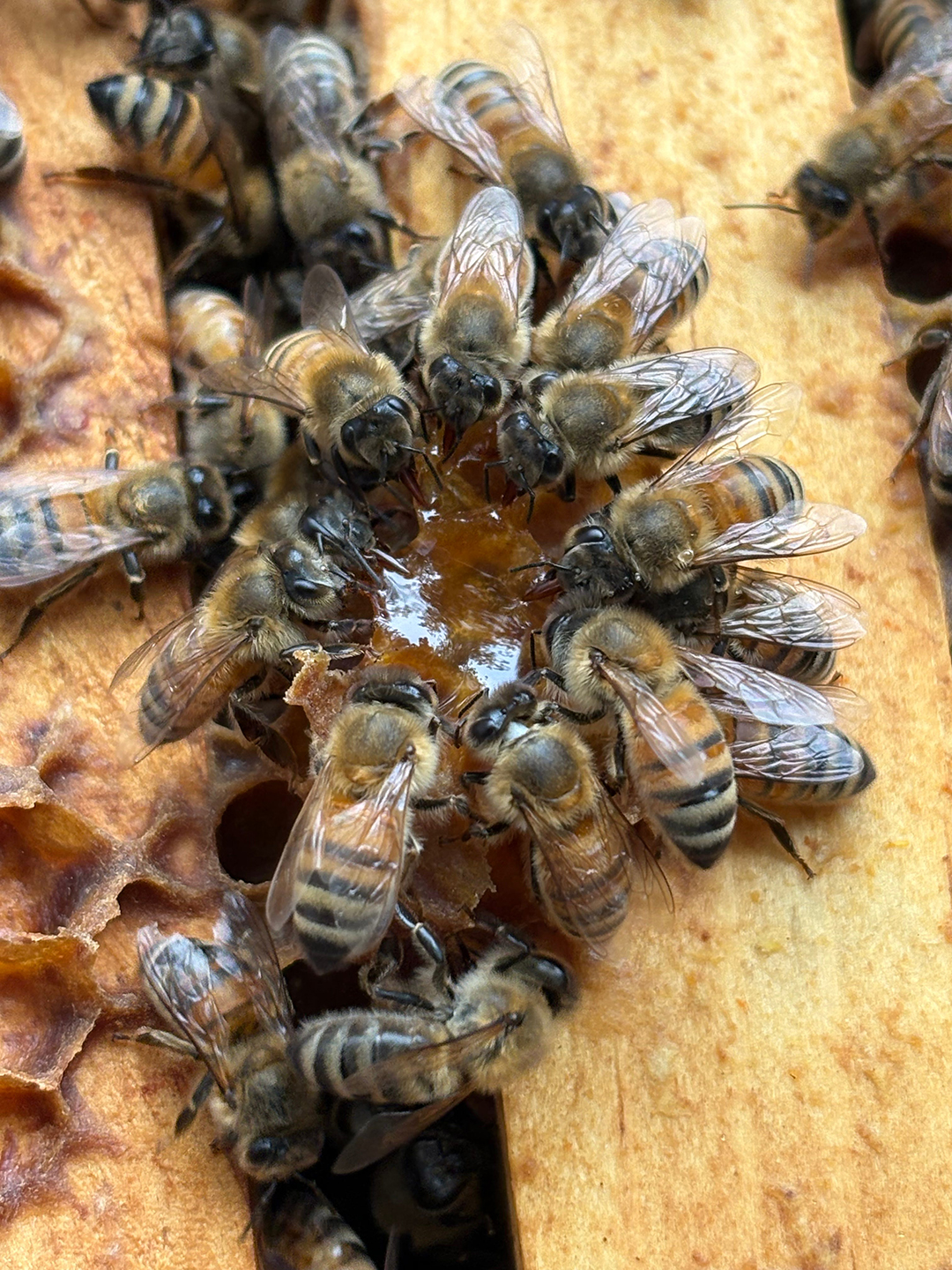
Perhaps it’s similar for you? Where the work you hold can be more expansive than the Job that ascribes financial worth.
For me, Call is something which shows up in an accumulation of micro choices, the ethical “yes” to the next right step— whatever that is. Part of it is a Yes into this work, but Lord knows Pastorin’ isn’t always fun, easy, or even enjoyable.
More than that, it’s a Yes into the questions of how do I show up today in alignment with my faith and values?
Faced with an important choice, I take a moment to measure what is important through equity primes:
How does this impact my family?
Have I prayed about this?
What is the “yes” here, and what am I saying “no” to?
When I want to get right with my faith and a call towards the future:
How does this help bring about a collective liberation? Who am I bringing along? (Who am I leaving behind?)
Am I making this decision on comfort? And if so, what’s the cost, to whom?
As a Christian pastor, I add: is this towards the direction that Jesus teaches me to organize?
All of my Call is a culmination of those micro choices that point to the world I want to help be a part of building. It’s one centered in a reproductive justice articulated by the Black Mothers of the Movement in Sistersong: the human right to maintain personal bodily autonomy, have children, not have children, and parent the children we have in safe and sustainable communities. All of us. And I want to be clear: in the future I am part of co-creating… it’s a world with a garden of genders, a tapestry of race and ethnic expression and culture, an accessibility of Creation. A hum of hallelujah.
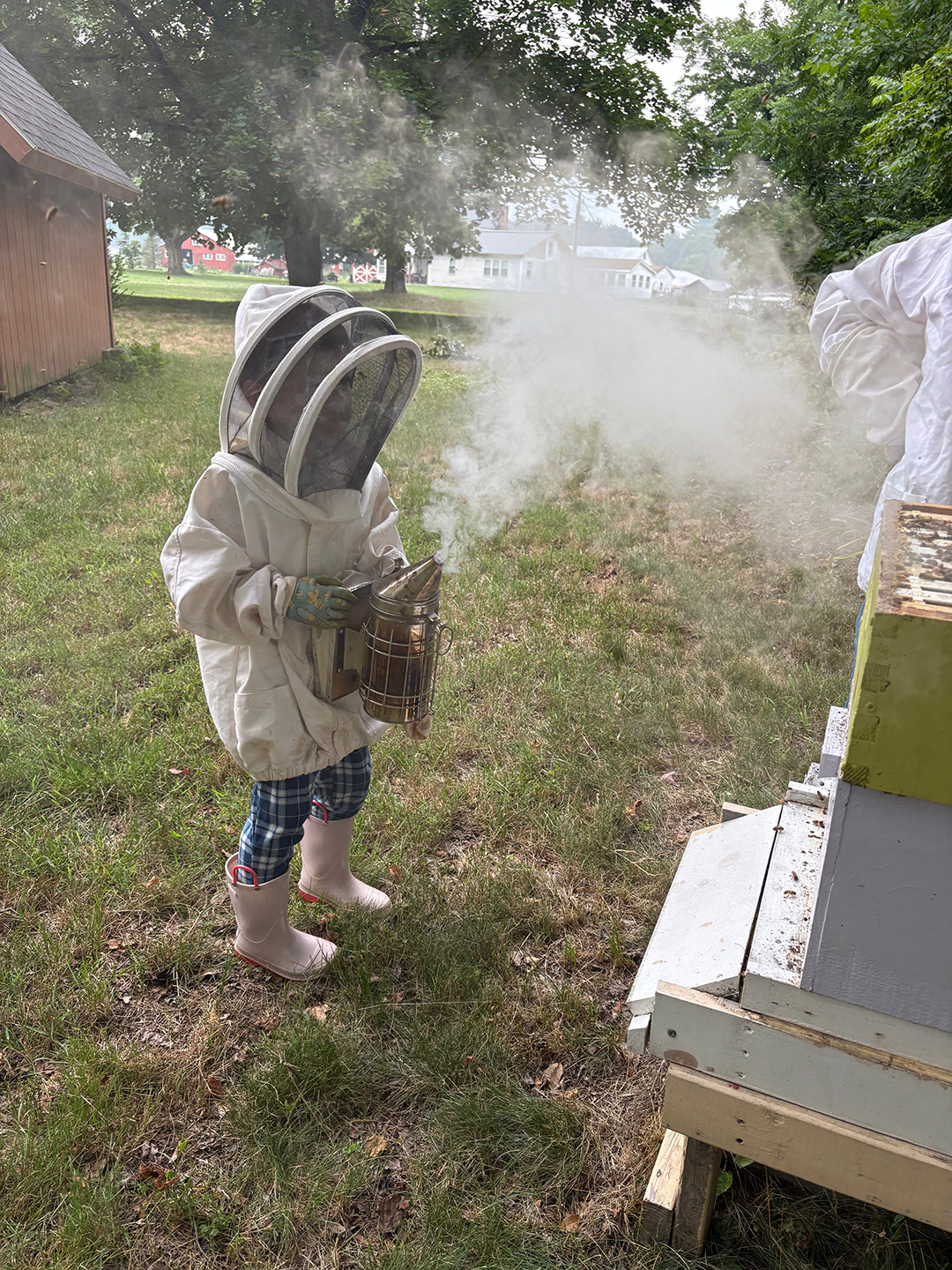
Each “yes” towards the world we imagine for our great, great, great, great, granddaughters is one that carries a spark of hope within it, a foundation offered towards that which is to follow.
My job is a way to help bring that about. And my job will change, like the bees, in age and in wisdom, and the needs of our hive.
So, too, Burnt Out, may yours. I encourage you to think of some questions that help you align your micro-decisions to your values. What is important to you about how you show up in the world? Is it family, rest, stability? Is it communal care, connection, and collaboration? Whatever those values are, you can begin to notice how they show up in your job, and in your life.
They can help in discernment with which “yes” becomes important, and how. And how holy “no” can be; making space for what is critical in the ongoing labor of alignment, and world-building towards the future that you want for yourself, and your community.
Finally, Burnt Out Bee-loved… I would offer that your very thoughtfulness about this tells me that you are doing the work. Your longing of thoughtful contribution IS a recognition of call. Breathe, bee, and be intentional in the ways in which you become closer to the version of yourself supporting values, community, and commitments.
So much love with you, dear one.
P.S. This blog is an ongoing conversation with readers. You’re invited! Please, write in with something you’re holding in awareness, thinking deeply about, or wonder, along with the bees! I’d love to love on YOU.
💗🍯🐝